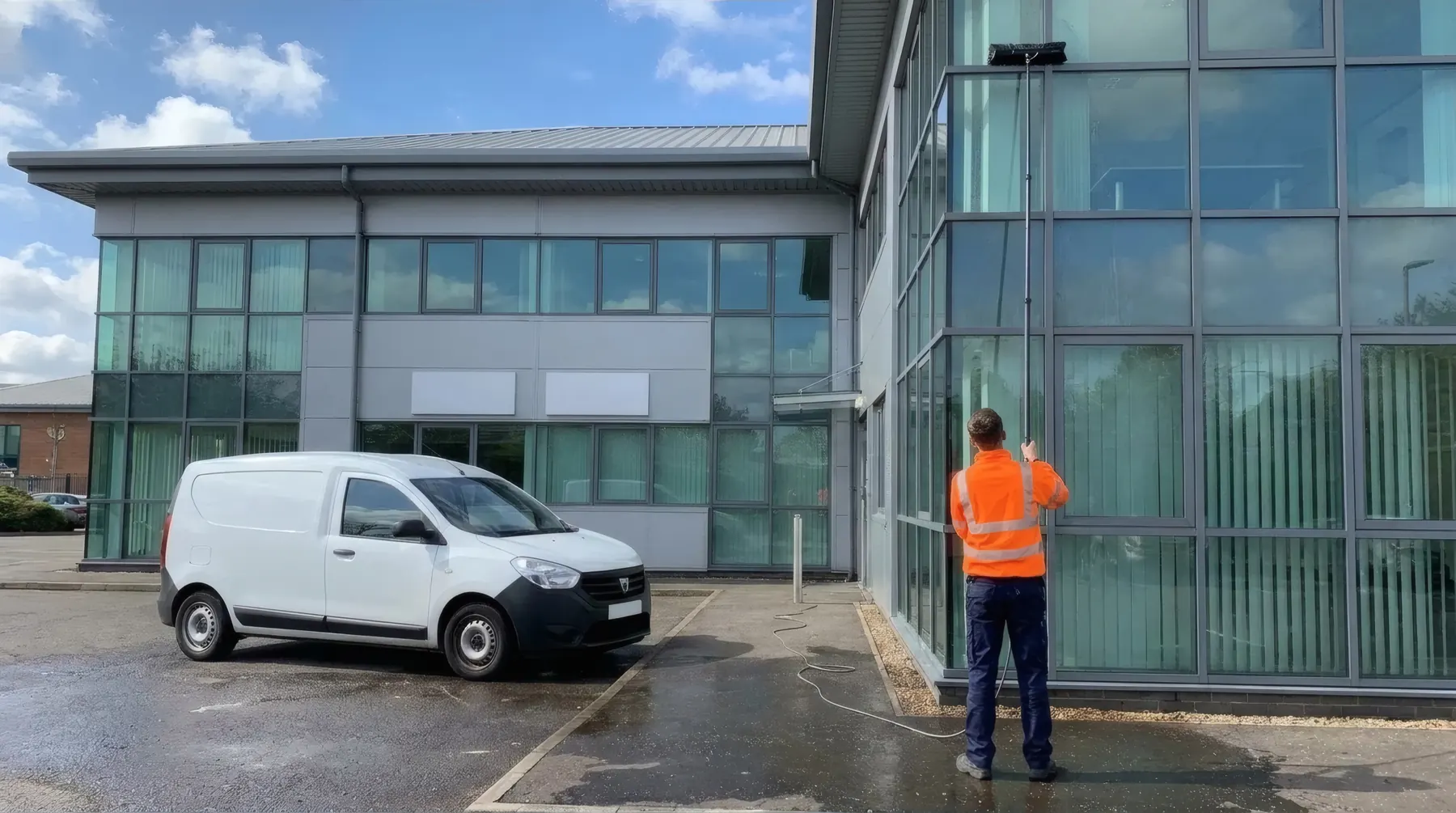
What RAMS are
RAMS stands for risk assessment and method statement. The risk assessment lists what could go wrong on the job and what's being done about it. The method statement sets out, step by step, how the work will be done.
The law requires employers to assess the risks of the work they do, under the Management of Health and Safety at Work Regulations 1999. Businesses with five or more employees must write down the significant findings. A method statement isn't named in law in the same way, but for exterior cleaning it's standard practice, and it's the part that tells you what will actually happen on your site.
If you're responsible for the building, asking for RAMS before work starts is reasonable and normal. Any contractor worth booking will send them without fuss.
The rules that usually apply
A few sets of regulations come up on most exterior cleaning jobs.
- The Work at Height Regulations 2005. Work at height should be avoided where it reasonably can be, and planned and done safely where it can't. This is why water-fed poles and ground-based gutter vacuums are now the normal way to do a lot of this work.
- COSHH, the Control of Substances Hazardous to Health Regulations 2002. Any chemical used, such as a biocide on a roof or a cleaning solution on cladding, should have its own assessment and a safety data sheet.
- CDM 2015, the Construction (Design and Management) Regulations. Cleaning that uses water or abrasives at high pressure, or corrosive or toxic substances, can count as construction work. If your job involves heavy pressure washing or strong chemicals, ask the contractor how they've treated it.
You don't need to be an expert in any of these. You do need the RAMS to show the contractor has thought about them for your building.
What a good RAMS should cover
The best test is simple: could someone who's never seen your site read it and know how the job will go? A good one covers the following.
Your site, by name
The address, the parts of the building being cleaned and the date. It should be about your building. A generic template with no site details tells you very little.
Who's coming
How many people, who's in charge on the day and how to reach them. For a cherry picker, the operators should hold a recognised training card, such as an IPAF PAL card. Ask to see it.
How they'll reach the work
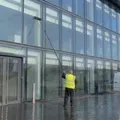
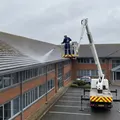
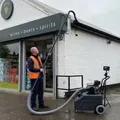
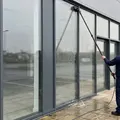
Water-fed poles from the ground, a gutter vacuum from the ground, a cherry picker, or ladders for short tasks. If a cherry picker is used, where it will stand, how the ground has been checked and what the rescue plan is if it fails at height.
Keeping people safe below
Where the cones or barriers will go, how entrances stay open and how staff, customers or pupils are kept out of the work area. On a school or a busy retail site this matters more than anything else.
Water and chemicals
What products are used, with safety data sheets, and where the waste water goes. Dirty water and chemicals shouldn't go into surface water drains, which often run straight to streams and rivers.
Fragile roofs and overhead hazards
Roof lights, old cement sheet roofs and other fragile surfaces should be identified, with a clear statement that nobody will walk on them. Overhead power lines near where a cherry picker or long pole will be used should be named too.
Weather limits
When the work stops. High wind matters for cherry pickers and long poles. Ice matters for anyone on the ground with water.
Emergencies
First aid, the nearest A&E, and how to report an accident or near miss to you.
Insurance to check alongside
Ask for the public liability certificate and check the amount, the company name and the expiry date. If the contractor employs people, they must also hold employers' liability insurance by law. Our public liability cover is £5m, and the certificate comes with the quote.
Warning signs
- RAMS that arrive on the day, or not at all
- Another site's name left in the document
- No mention of how the height is reached
- No exclusion zone near entrances
- Chemicals used with no safety data sheet
- Someone planning to walk on a roof that might be fragile
None of these mean the contractor is bad at cleaning. They do mean you'd be taking their word for it.
Subcontracted work
If the company you book uses a subcontractor, ask whose RAMS you'll get and who checked them. You should get RAMS from whoever is actually doing the work, and the company you booked should have read them.
That's how we work outside Essex. We do Essex jobs ourselves. Elsewhere in the UK, a local specialist we've vetted does the work. We check their insurance and get the RAMS for your site before anyone turns up, and we stay your contact and responsible for the job. More on how we work.
What to keep on file
For each job, keep the RAMS, the insurance certificate and the job report with before and after photos. If anyone asks later how the work was done, or whether gutters and roofs have been maintained, it's all there. Our exterior cleaning checklist for facilities managers covers the full yearly plan.