Why cladding needs care
Most commercial cladding is coated. Metal and composite panels have a factory-applied paint or plastic coating. uPVC has its own surface. Render may be painted or have a coloured finish. That coating is what keeps the panel looking right and, on metal, what stops it corroding.
Cleaning should take the dirt off and leave the coating alone. Most damage to cladding during cleaning comes from using too much pressure or the wrong chemical.
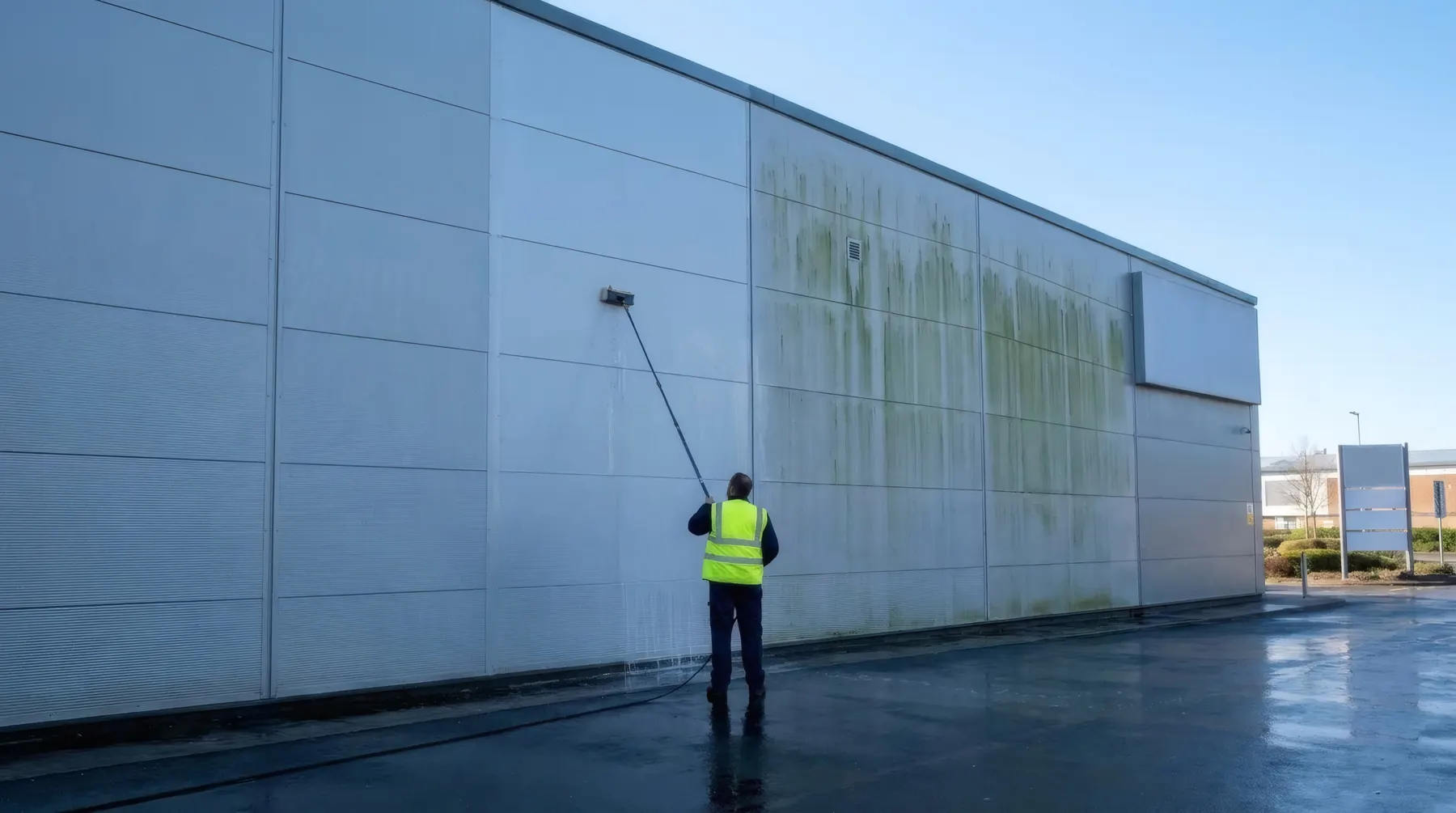
What turns cladding green or black
- Algae on shady and north-facing sides, which stay damp longest
- Traffic film near roads and car parks
- Dirty streaks where rainwater runs off sills, copings and window heads
- Dirt under soffits, canopies and overhangs, where rain never reaches
- Bird mess under ledges and lights
All of that comes off. What won't come back is a coating that has faded or gone chalky in the sun. Cleaning can make chalky panels look better, but it won't make them new. We tell you which it is before you book.
Why not pressure wash it
High pressure can lift the edge of a coating and peel it, especially round cut edges, fixings and joints. It can force water behind panels and into seals. On render it leaves stripes and can wear the surface. The damage often doesn't show until months later.
How it should be cleaned
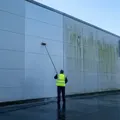
A soft wash at low pressure
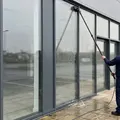
A cleaning solution suited to the surface goes on at low pressure and is left to work. It loosens the dirt and kills the algae. Then it's rinsed off, also at low pressure. The water does the carrying, not the force.
Matched to the material
Metal panels, composite panels, uPVC and render don't all want the same solution. Strong solvents can soften some coatings, and abrasive pads scratch them. The solution and brushes should be chosen for what's on your building.
A test patch first
We clean a small area first, somewhere out of the way, so you can see the result before the rest is booked. It also shows whether the coating is sound or chalky.
Top to bottom, one side at a time
The building is done one side at a time, working down, so dirty water doesn't run over panels that are already clean.
The frames and trims too
Window frames, trims and flashings are done with the panels. A clean wall with dirty frames still looks dirty.
Keeping your guarantee safe
Many cladding systems come with a guarantee from the coating or panel maker. Some of these guarantees have maintenance conditions. A common one, on coated steel, is regular inspection and washing of areas the rain doesn't reach, like under soffits and canopies, where dirt sits and can attack the coating over time.
Check your guarantee document, or ask your building's owner or the original contractor for it. Look for:
- How often cleaning or inspection is expected
- Any cleaning methods or products that are ruled out
- Whether you need to keep records of the work
If there is guidance from the maker, send it with your enquiry and we'll follow it. Keep the job report and photos from every clean. If you ever need to make a claim, records of regular, gentle cleaning are what you'll be asked for.
Reaching the height
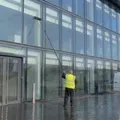
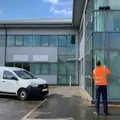
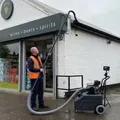
Single-storey units can often be done from the ground with poles. Taller buildings need a cherry picker, which needs room to stand near each side. We look at access at the quote and put it in the price. We don't do work that needs rope access or a building's own cradle, and we'll tell you if part of your building needs that.
Keeping the building running
We cone off the area directly below where we're working and keep entrances open. If an entrance itself needs doing, we do it before you open. Wash water is kept out of surface water drains, which often run straight to streams and rivers.
You'll get a risk assessment and method statement for your site before work starts, including the products used and their safety data sheets. Our guide to RAMS for exterior cleaning explains what to look for.
Fascias, soffits and canopies
These are easy to forget and often the dirtiest parts of the building, because the rain doesn't reach them. Dirt and cobwebs sit under soffits and canopies for years. On coated metal, that's also where a guarantee is most likely to ask for washing. They're cleaned with the walls, by the same soft wash method.
How often
- Shaded or north-facing sides: once a year
- Most units and offices: every one to two years
- Before a lease ends: a one-off clean
The end of a lease is a common time to clean cladding, as part of putting the building back in good order.
What it costs
It depends on the area of cladding, the height of the building, how it's reached and how stained it is. We price from a look at the building or clear photos of each side, as a fixed price in writing.
In Essex we do the work ourselves. Elsewhere it's done by a local specialist we've vetted, with insurance checked and RAMS agreed first. See cladding cleaning for more.