Why gum is so hard to shift
Fresh chewing gum is soft and sticky. Once it's been trodden in, it flattens into the surface of the paving and hardens into a grey or black spot. It's made to stay chewy, so it doesn't break down on its own like food waste does. Left alone, gum on a busy entrance just keeps building up.
On porous paving, like concrete slabs and block paving, the gum works into the surface. That's why scraping leaves a mark and why a quick go with a pressure washer often makes it worse.
Why a pressure washer on its own doesn't work
A jet of cold water at high pressure tends to smear gum across the slab rather than lift it. To get it off, you end up turning the pressure up and moving in close. That can cut into the surface of the slab and blow out the joints, leaving a rough patch that holds dirt and gum even better than before.
How it should be done
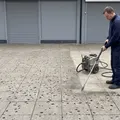
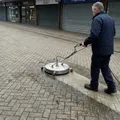
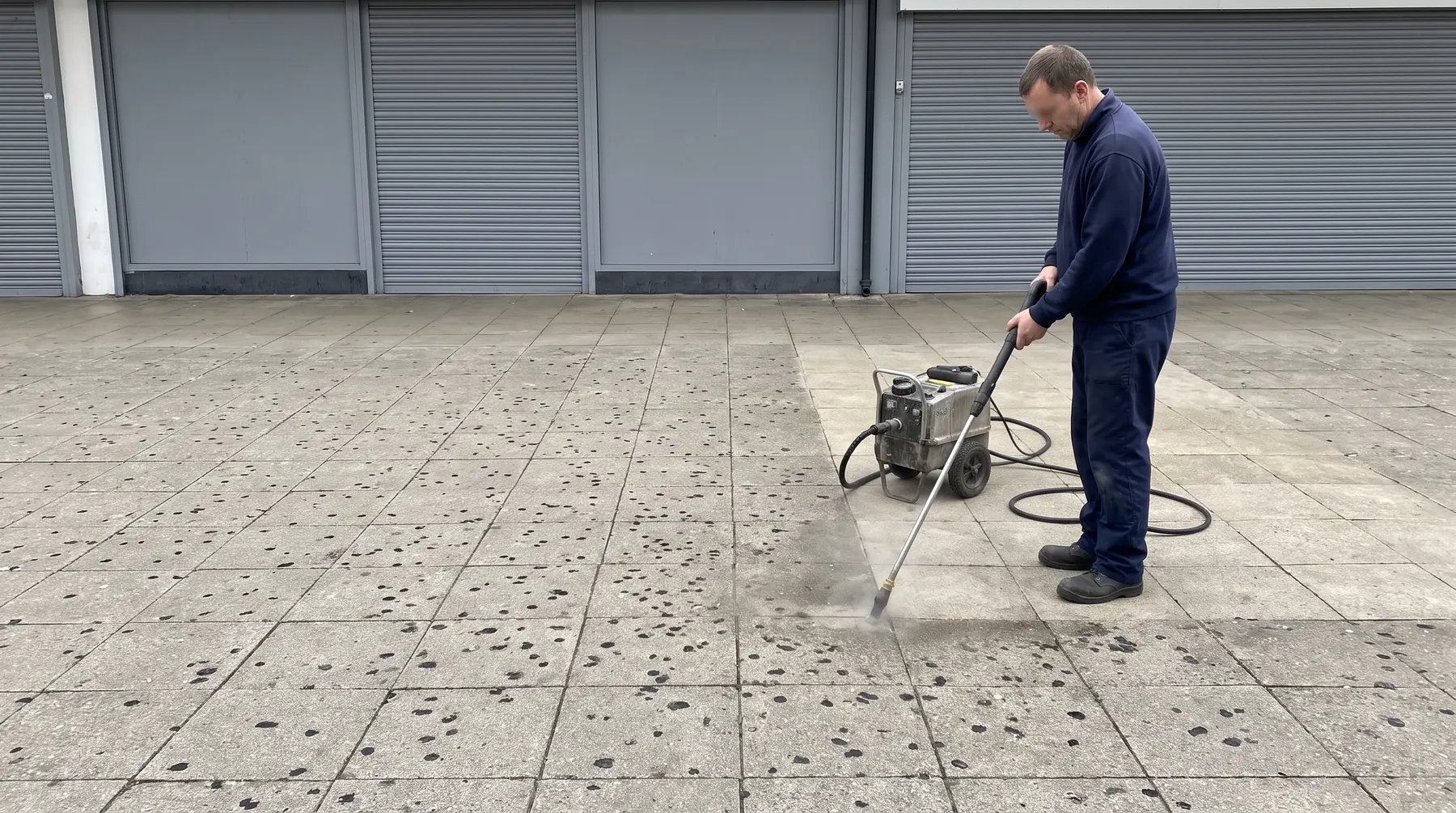
Gum comes off cleanly when it's softened first. We use steam at low pressure. Each piece is heated until it lets go of the surface, then lifted away. It's slower than blasting, but it leaves the slab as it was.
Once the gum is off, the whole area is rinsed. That step matters more than people expect. Gum removal on its own can leave clean spots dotted across dirty paving, which looks almost as bad as the gum. Rinsing the whole area means it dries to one colour. If the paving is very dirty overall, we'll suggest washing it on the same visit. More on commercial pressure washing.
We do a test area first, so you see the result before the full job is booked.
Different surfaces
Steam at low pressure is safe on concrete slabs, natural stone, block paving and tarmac. Each behaves a little differently. Tarmac can soften with too much heat, so the steam is kept moving. Block paving loses some sand from the joints when it's rinsed, and that's brushed back in if the area is washed as well. Natural stone can stain if gum has sat on it for years, and the stain may fade without going completely. The test area shows what to expect on yours.
Where it's worst
- Shop doorways and the pavement directly outside
- Bus stops, taxi ranks and benches
- Precincts and shopping centre walkways
- School gates, playgrounds and paths to the canteen
- Office smoking areas and entrances
- Station forecourts and car park pay machines
Anywhere people stand and wait collects gum.
Who's responsible for which ground
On the public highway, which includes most pavements, it's usually the council's job. Many councils have had grants from the Chewing Gum Task Force, a scheme run by Keep Britain Tidy and backed by government, to clean gum off their streets.
Your own ground is yours. That includes your forecourt, your car park, your entrance, private walkways in a retail park or business park, and the paths and playgrounds at a school. If you're a landlord or managing agent, the shared areas of a precinct or retail park are usually part of the service charge.
If you're not sure where your boundary is, your lease or title plan should show it. The line between your forecourt and the public pavement is often a change in paving or a row of kerbs.
Working round opening hours
Busy entrances are best done before you open, so nobody walks through wet paving. For a precinct or shopping centre that's open early, we work in a small coned-off area that moves with us. Steam at low pressure is quiet compared with a pressure washer, and there's no spray drifting into doorways.
Schools are usually done in the holidays, when the playgrounds are empty.
How often
- Shop doorways and precincts: every three to six months
- Schools and colleges: each holiday
- Bus stops and entrances: every three months
Most sites book one deep clean, then lighter visits to stay on top of it. Each light visit takes less time because there's less gum, so it costs less.
Stopping it coming back
You can't stop people dropping gum, but you can slow it down.
- Put bins near where people wait, especially at bus stops and entrances
- Keep the area clean. People drop less on clean ground than on ground that's already covered
- Book regular light visits so it never builds up to a big job
What it costs
It depends on the size of the area and how much gum there is per square metre. We price from a look at the site or from photos, as a fixed price for the area agreed. Doing it with a pressure wash of the same paving is usually cheaper than two separate visits.
In Essex we do the work ourselves. Elsewhere it's done by a local specialist we've vetted, with insurance checked and RAMS agreed first. See chewing gum removal for more.